Series: Matter from A to Z · Part 6 of 8
Matter vs Zigbee Compared: Differences and What Suits You
Matter vs Zigbee compared: similarities and differences in gateway, network and device choice. Helps you decide for your smart home.
By Tobias ·· 6 min read
Matter vs Zigbee is a question that many people ask when they are building or expanding their smart home. Both terms stand for technology that lets devices talk to each other wirelessly. They are not the same thing, though, and you can't simply weigh one against the other. Matter is a standard for communication between devices and control systems. Zigbee is its own widely used radio protocol. Here you'll learn where the two differ, where they complement each other and which option fits your household.
Matter vs Zigbee: the most important differences at a glance
Zigbee and Matter share a common root in the environment of the Connectivity Standards Alliance (CSA), which used to be called the Zigbee Alliance. Even so, they work in different ways. The following table shows the most important points:
| Feature | Matter | Zigbee |
|---|---|---|
| Type | Standard for communication between devices and systems | Radio protocol with its own device ecosystem |
| Network basis | IP network, for example Wi-Fi, Ethernet or Thread | Its own radio network in the 2.4 GHz band |
| Central component | Controller in the home network | Coordinator, usually as a gateway or hub |
| Cross-manufacturer | Explicitly intended | Many manufacturers, but limited depending on the device |
| Multiple systems | Multi-admin is possible | A device usually depends on one coordinator |
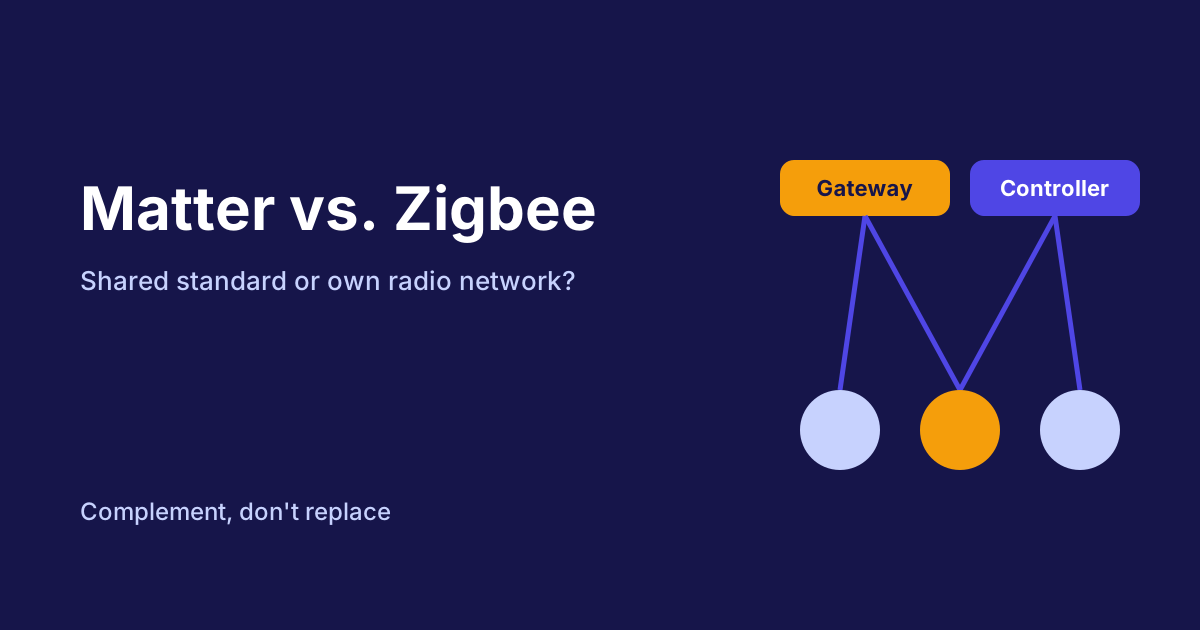
The most important difference lies in the network. Matter works with the Internet Protocol that your home network already uses. Zigbee forms its own radio network, which is integrated into your system via a gateway.
What Matter and Zigbee have in common
Both technologies are designed for smart home use. They rely on radio, support devices such as lamps, plugs, switches and sensors, and are built so that devices can forward messages to each other. Many Zigbee devices operate in the 2.4 GHz band, and Thread, one of the radio technologies used by Matter, also uses this band.
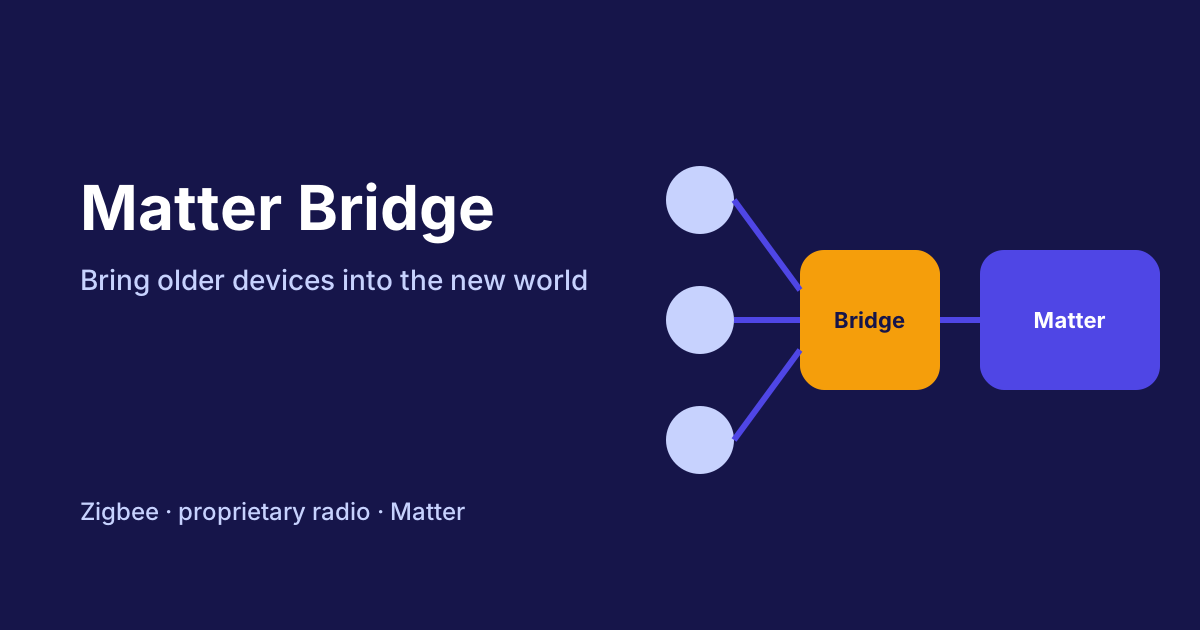
For you as a buyer, this means both worlds have established products, and you don't necessarily have to choose one exclusively. A bridge can also bring Zigbee devices into Matter systems. How this works is explained in the article Matter Bridge: Integrating Zigbee and Other Devices into Matter.
Where Zigbee has its strengths
Zigbee has been widespread in the smart home for years. This brings advantages:
- A large selection: There are many devices, including inexpensive sensors and switches.
- Its own network: A Zigbee network works as soon as the coordinator and devices are set up.
- Proven practice: Many users know the principle, and numerous guides exist.
If you already own many Zigbee devices, there is usually no reason to replace everything at once. A gateway with Zigbee radio and Matter support can connect both worlds.
Where Matter has its strengths
Matter focuses on manufacturer independence and local control. The advantages show up in everyday use:
- One standard for several brands: Devices from different manufacturers can be integrated into a Matter system.
- IP-based: The connection uses familiar network paths. Thread devices connect to the home network via a border router.
- Several systems possible: With multi-admin, a device can be used in different apps or hubs.
- Local control: Commands stay in the house, as long as the system implements it that way.
You'll find the basics of Matter in the article What Is Matter?. The different radio technologies are explained in the article Thread, Wi-Fi or Ethernet.
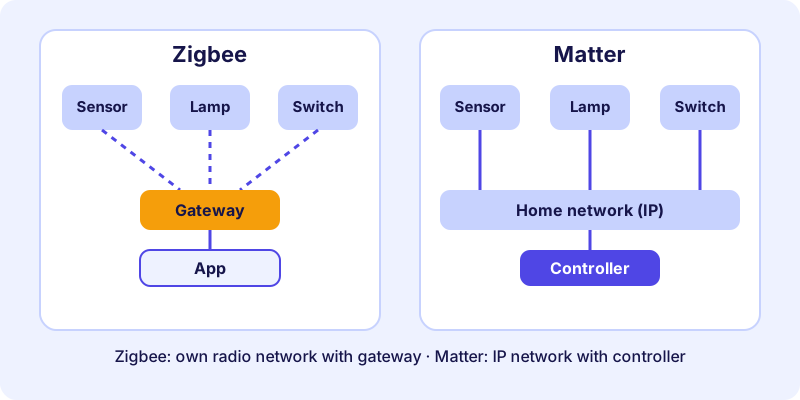
The gateway: the most important decision
With Zigbee you can hardly avoid a gateway, also called a coordinator or hub. It manages the Zigbee network and establishes the connection to your app. With Matter, the controller takes on this role in the home network. If you use Thread devices, you also need a border router. You'll learn more in the article Border Router and Controller.
An example of a Zigbee coordinator with an Ethernet port:
When buying a gateway, check which radio technologies it supports and whether it offers Matter as a bridge or as a controller. These are not the same, and the requirements for your devices can differ.
Which option suits you?
The decision depends on your situation. These questions help you classify it:
- Do you already have many Zigbee devices? Then it's worth continuing to use them via a bridge or a gateway.
- Do you want to combine devices from different brands? Matter is designed for this and offers the clearer approach here.
- Do you want to keep the option of switching systems open? Matter devices can often be shared between systems more easily with multi-admin, as long as the system supports it.
- Is a large, affordable selection of sensors important to you? Zigbee often offers a wide range here.
There is no one-size-fits-all answer. Many households combine both worlds, for example with a gateway that serves Zigbee devices and at the same time integrates Matter devices.
Common misunderstandings
A few misconceptions come up again and again:
- "Matter replaces Zigbee." That's not accurate. Matter is a standard, not a direct successor. Zigbee devices remain usable, often through a bridge.
- "Zigbee is automatically slower." Response times depend strongly on the device, the gateway and the configuration, not on the protocol alone.
- "Matter always works without internet." Local control works without internet. Remote access and voice services still require a connection to the outside.
Conclusion: Matter or Zigbee?
Matter and Zigbee cannot be cleanly played off against each other, because they describe different layers. Matter is the standard for devices and systems, while Zigbee is a widely used radio protocol. If you are starting from scratch and want to combine devices from different brands, Matter is a good foundation. If you already own many Zigbee devices, connect them through a suitable gateway or bridge. In the device directory you'll find certified Matter devices that you can search for specifically.
Frequently asked questions
Is Matter better than Zigbee?
It depends on your goal. Matter is designed for cross-manufacturer devices and local control. Zigbee offers a large selection of devices. Both have strengths, depending on your household.
Can I use Zigbee devices with Matter?
Yes, through a Matter bridge or a gateway that integrates Zigbee devices into Matter. Whether and how this works depends on the product.
Do I need a hub for Zigbee?
As a rule, yes. A Zigbee coordinator or gateway manages the network and connects it to your control system.
Do Matter and Zigbee use the same radio frequency?
Both technologies often use the 2.4 GHz band. That's why radio networks in the same home can affect each other if devices and gateways are placed unfavorably.
Should I switch to Matter now?
If you are starting from scratch, Matter is a future-oriented choice. You don't have to replace existing Zigbee devices right away. A bridge can make the transition easier.