Thread vs. Zigbee: Mesh Networks Compared in Detail
Thread vs Zigbee in detail: two mesh networks on the same radio basis with different network logic. Border routers, coordinators and examples explained.
By Tobias ·· 7 min read
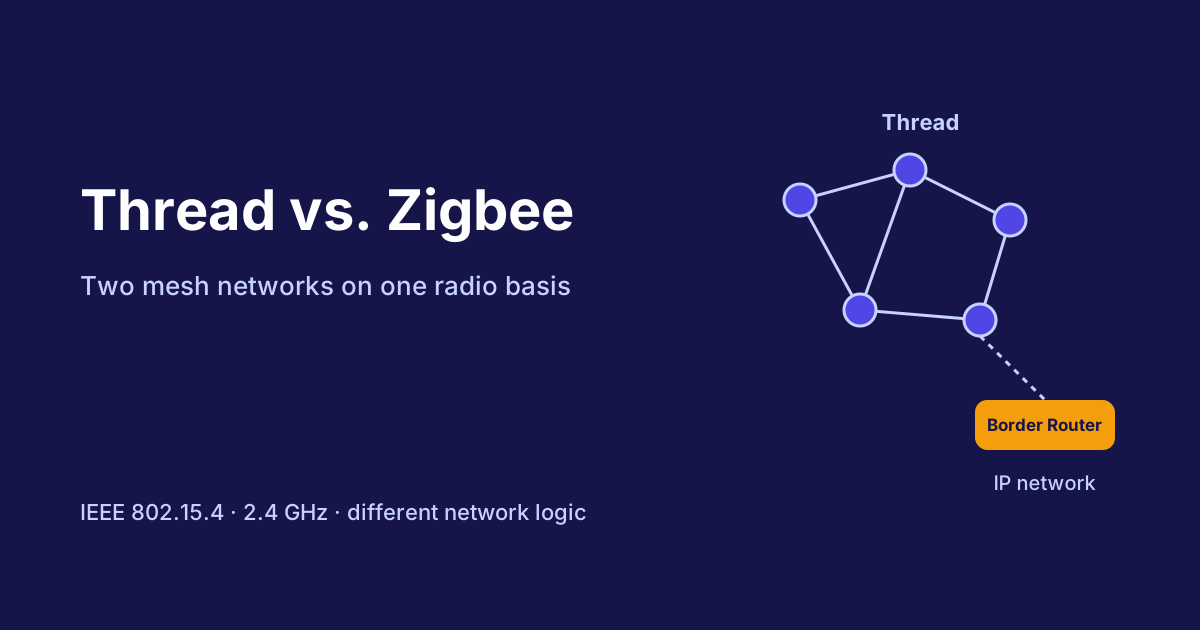
Thread vs Zigbee is a comparison in which many terms get mixed up. Both technologies build mesh networks in which devices forward messages for others. Both operate in the 2.4 GHz band. Even so, they are not the same. Thread is IP-based and forms the radio basis for Matter over Thread. Zigbee has its own coordinator and its own application layer. Here you will learn how the two networks differ in structure, how they affect everyday use, and what role they play in the Matter environment.
Thread vs Zigbee: the short answer
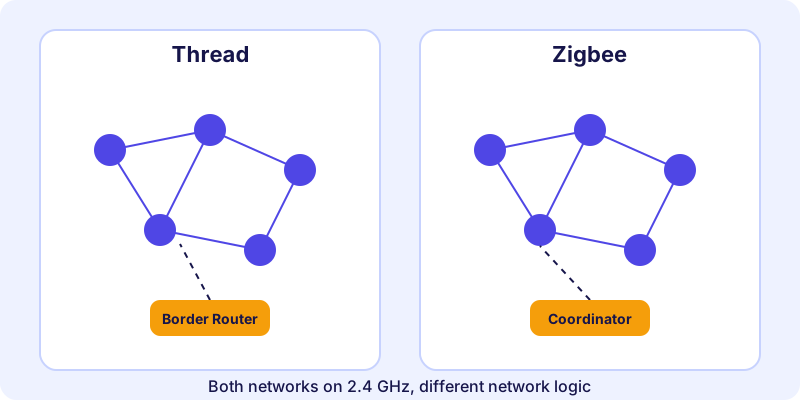
Both networks are based on the IEEE 802.15.4 radio standard and operate in the 2.4 GHz band. The decisive difference lies in the network logic. Thread uses IPv6 and needs a border router that connects the radio network to your home network. Zigbee relies on a coordinator and its own application layer. Thread is the foundation of Matter over Thread, while Zigbee devices reach Matter only through a bridge.
What both networks have in common
Thread and Zigbee share a few important characteristics:
- Mesh structure: Devices forward messages instead of only talking directly to a central hub. How well this works in the house depends on placement and surroundings.
- Shared radio basis: IEEE 802.15.4 in the 2.4 GHz band is the foundation for both.
- Devices for smart home use: Sensors, switches, plugs and lamps exist in both worlds.
These similarities explain why the two technologies are often confused. The difference only becomes visible in the network logic above them.
A detail that is often overlooked: battery-powered devices generally do not forward messages in either network. They depend on a mains-powered device within range. The network is therefore only as good as its mains-powered devices and how they are distributed around the house.
Thread: an IP network in a radio mesh
Thread is an IP-based mesh network. Its devices use IPv6, so they can be addressed like any other network participant. This is Thread’s strength, because it fits into existing network structures.
For this there is a central component: the border router. It connects the Thread network to your Wi-Fi or Ethernet. Without it, a controller cannot reach the Thread devices. I explain this in more detail in the article Border router and controller.
An example of a device with border router functionality for Thread:
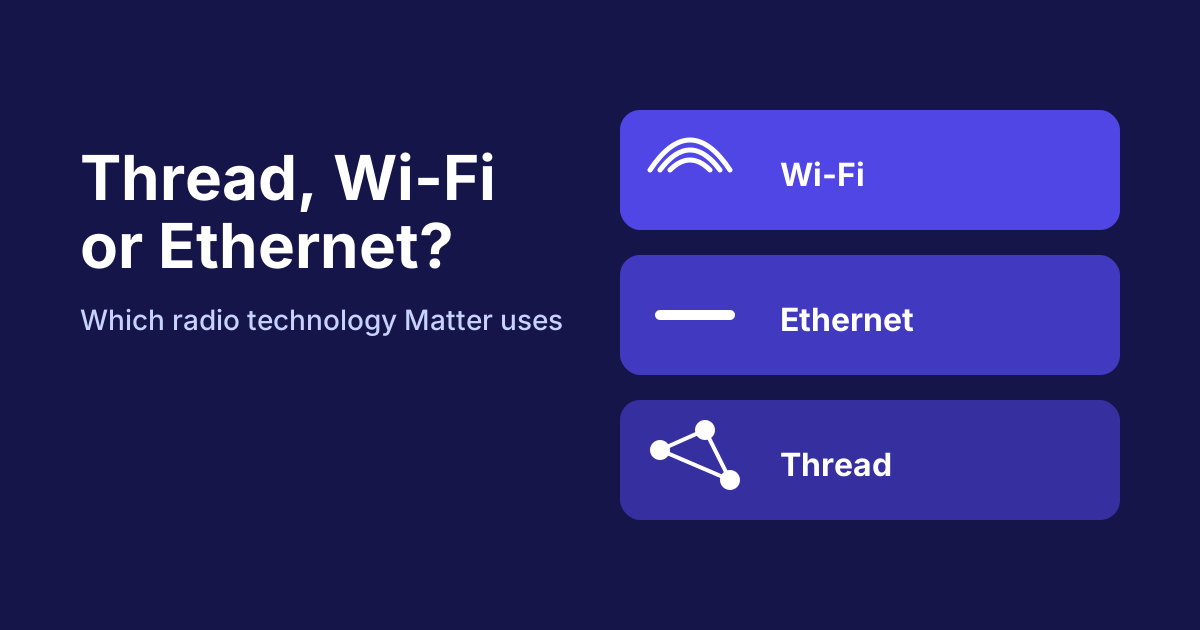
Matter over Thread builds on Thread: Matter devices use Thread as their transport. The background on the radio paths is covered in the article Thread, Wi-Fi or Ethernet.
Zigbee: its own network with a coordinator
Zigbee forms its own radio network. A coordinator starts and manages it. It determines how the network is structured and admits new devices. Zigbee also brings its own application layer, meaning its own commands and device profiles. That is why a Zigbee device does not speak Matter directly.
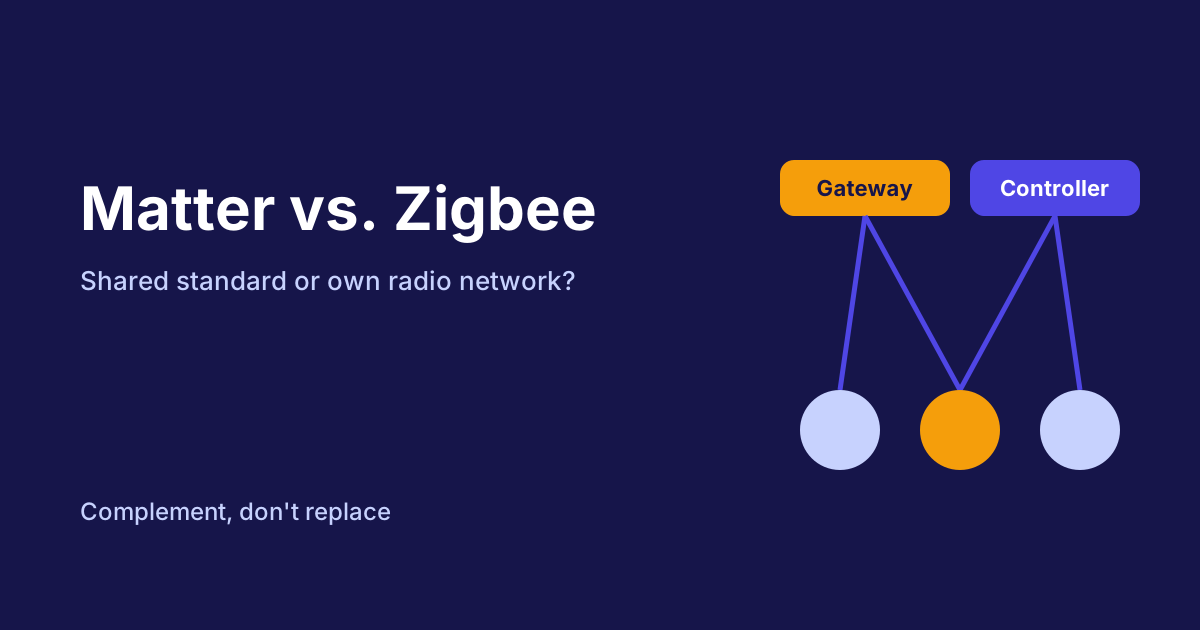
To connect it to a Matter system, a bridge is needed. The article Matter bridge explained shows how such a bridge works.
The comparison in a table
This overview summarizes the differences:
| Feature | Thread | Zigbee |
|---|---|---|
| Radio basis | IEEE 802.15.4, 2.4 GHz | IEEE 802.15.4, 2.4 GHz |
| Network logic | IPv6, IP-based | Own network with a coordinator |
| Central component | Border router into the IP network | Coordinator or gateway |
| Application layer | Matter with Matter over Thread | Zigbee-specific device profiles |
| Connection to Matter | Directly via Matter over Thread | Only via a bridge |
The table shows differences in structure, not a ranking. Both networks can make sense. What matters is which devices you actually need, whether your control system supports both networks, and whether you want Matter as a common layer.
Practical examples
The following typical situations show what the differences mean in everyday life:
- A Thread device in a Matter system: The device logs in to the home network through the border router. If the border router fails, the device is unreachable for the controller, even though the device itself works.
- A Zigbee sensor on a gateway: The sensor hangs on the coordinator. The gateway is therefore a central point, and its placement helps decide how stable the network runs.
- A mixed house: Thread devices run through Matter, and the existing Zigbee devices run through a bridge or the existing gateway. Both networks stay active side by side.
- A new Thread device in a Zigbee household: Thread needs its own border router. A Zigbee gateway does not take on this role, even though both networks transmit in the same frequency band.
An example from the device directory is the Eve Energy (Europe) smart plug. The catalog lists it with Bluetooth and Thread, meaning a Thread connection that requires a border router in the network.
Setup in everyday life: what to watch for
Whether a network runs well in everyday life depends less on the technology than on how it is set up:
- Distribute mains-powered devices: Plugs, switches and lamps forward messages and stabilize the network. A device at the far end of the house benefits when intermediate stations exist.
- Connect the border router reliably: With Thread, all traffic into the home network goes through it. A dependable connection pays off directly.
- Place the coordinator sensibly: With Zigbee, the reachability of devices depends on the gateway. A central location with a good line of sight to the devices helps.
- Keep an eye on other radio sources: Both networks operate in the 2.4 GHz band, which Wi-Fi also uses. Radio sources located close together can affect each other.
Common misconceptions
Several misunderstandings come up in this comparison:
- “Thread is a better Zigbee.” That is not a meaningful comparison. Both solve similar tasks with different network logic.
- “Mesh always means long range.” Mesh improves coverage when enough devices are in the network. Walls, materials and placement still play a major role.
- “Both networks are automatically compatible.” They are not. Zigbee devices need a bridge, and Thread devices need a border router.
Conclusion: two networks, two approaches
Thread and Zigbee use the same radio basis, but they follow different approaches. Thread is IP-based and the foundation of Matter over Thread. Zigbee is its own network with a coordinator and a long-established range of devices. If you are planning something new and want to use Matter, Thread is an obvious choice, provided you plan for a border router. If you already have many Zigbee devices, it is worth looking at a bridge. In the device directory you can find Thread devices in a targeted way.
Frequently asked questions
Is Thread the same as Zigbee?
No. Both networks use IEEE 802.15.4 in the 2.4 GHz band, but they work differently. Thread is IP-based, while Zigbee has its own coordinator and its own application layer.
Do I need a border router for Thread?
Yes, so that Thread devices can communicate with your home network and the controller. Many devices and systems already include this function.
Do I need a coordinator for Zigbee?
Yes, the coordinator or gateway manages the Zigbee network. Without it, there is no working Zigbee network.
Can a Zigbee device be connected directly to Matter?
Not directly. Zigbee does not speak Matter. A bridge or a gateway that connects Zigbee and Matter takes on this task.
Which network has the greater range?
There is no general answer. Range and stability depend heavily on the devices, their placement, the building and the number of devices in the network.